Everything Begins and Ends with Courtesy
Published Apr 4, 2025, J. Patrick Power
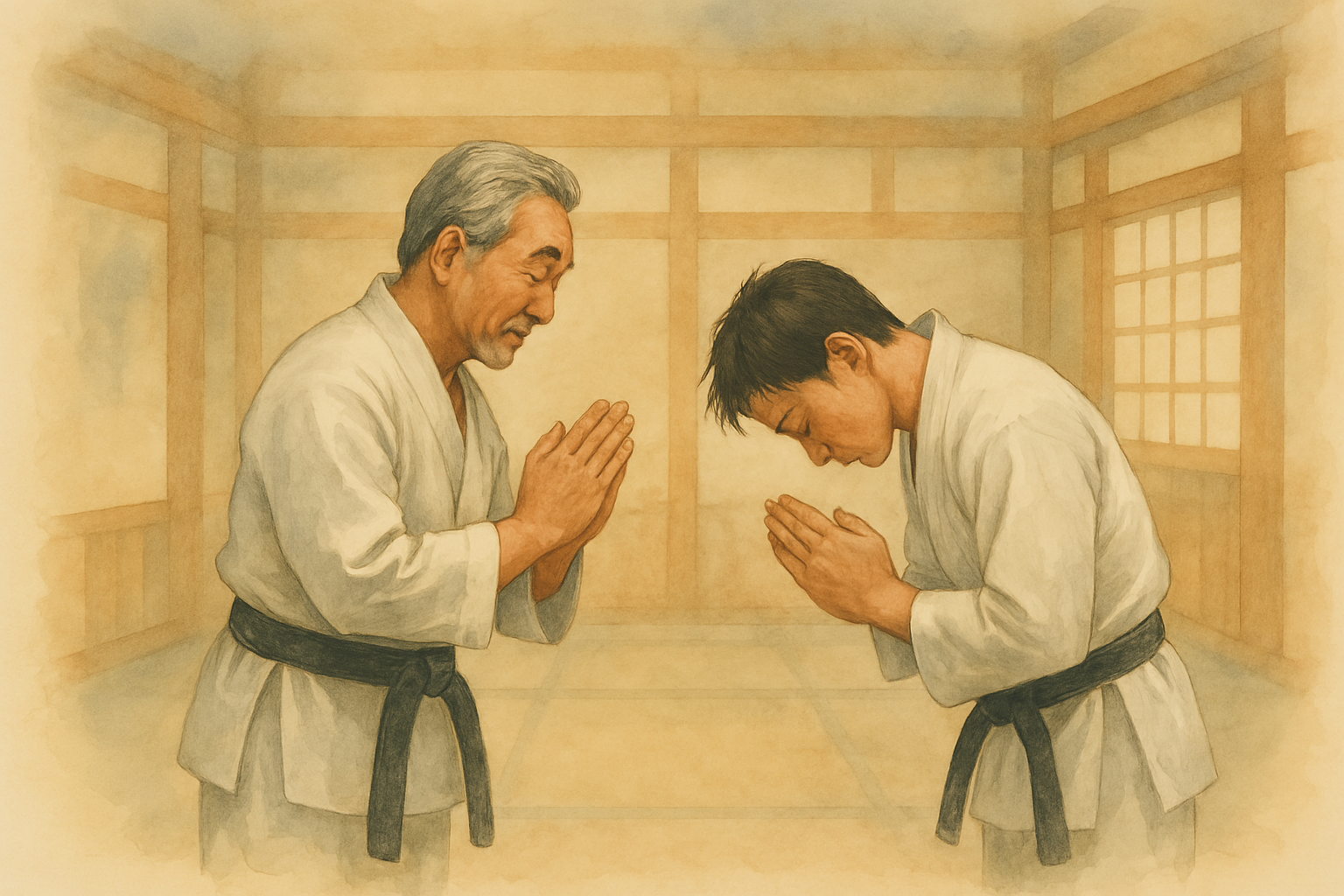
Take the bow seriously. Not just in a dojo, but in life.
Gichin Funakoshi, the founder of modern Shotokan Karate, once said, “Karate begins and ends with courtesy.” He followed that with an even deeper idea: “Think of everyday life as karate training.”
Together, these two principles offer more than a martial arts philosophy—they offer a blueprint for living. And for me, they are not abstract teachings. After more than 45 years as a dedicated martial artist, I’ve come to understand that these statements are not simply about etiquette or tradition. They reveal something essential about how we show up in the world
If karate begins and ends with courtesy, and if everyday life is karate training, then life itself—how we think of ourselves, how we interact with others, and how we lead—must also begin and end with courtesy.
Courtesy, in this deeper context, is not politeness for its own sake. It’s a discipline. It’s intentional respect. It’s the restraint to listen when you want to speak, the courage to respond instead of react, and the clarity to act with integrity even under pressure.
In leadership, courtesy is the difference between influence and control. It fosters psychological safety, trust, and a culture where people can thrive. I’ve seen firsthand—on the dojo floor and in professional life—that the most powerful leaders are those who carry themselves with a quiet strength. They don’t dominate the room—they create space for others to rise.
Funakoshi’s challenge to view life as training reframes our daily routines. Life isn’t just a series of events; it’s practice. Each interaction, each challenge, each decision becomes a moment to refine our character.
In martial arts, we internalize movement and principle through kata—deliberate, structured patterns repeated with precision and focus. In life, our kata takes the form of habits: how we start our mornings, how we navigate disagreement, how we treat people when no one’s watching. These patterns become who we are.
Courtesy also extends inward. Over the decades, I’ve learned that how we treat ourselves is just as telling as how we treat others. We must offer ourselves the same discipline and grace we offer a training partner. Self-respect is a form of courtesy—one that builds resilience, balance, and humility.
In a world that often mistakes speed for effectiveness and volume for leadership, the person who embodies courtesy—the one who leads with respect, listens with presence, and acts with intention—stands apart.
As Funakoshi taught, karate is life. And life, like all true practice, begins and ends with courtesy. So take the bow seriously. Not just in a dojo, but in life.
Let your day begin with awareness. Let your leadership begin with humility. Let your relationships begin and end with respect.
Back to previous page