The Hidden Risks of Hiring in a Remote Global Workforce
Published Apr 17, 2025, J. Patrick Power
Navigating the Rise of Deepfake Candidates
As organizations embrace the flexibility and reach of a remote global workforce, a darker challenge is quietly taking root beneath the surface: the rise of AI-generated job candidates and deepfake deception.
Remote hiring has unlocked access to talent pools across borders, enabling companies to find skilled workers in every corner of the world—from software engineers in Sri Lanka to analysts in Pakistan. But with these opportunities come significant risks. In this new hiring landscape, verifying the authenticity and integrity of candidates has become not only more complex but, for many companies, almost impossible.
The Emergence of Deepfake Job Applicants
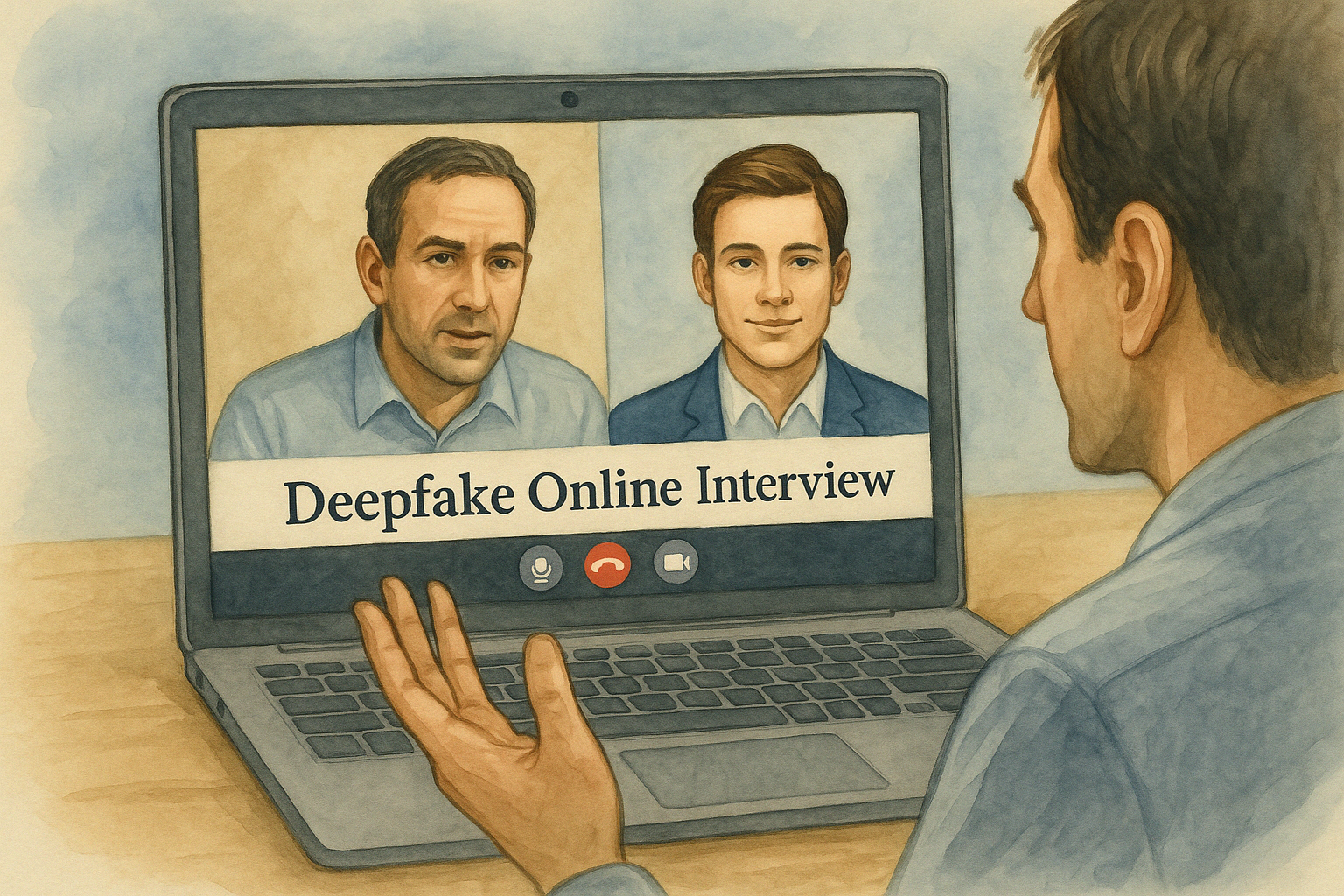
Artificial intelligence and deepfake technologies are evolving rapidly. Today, a fake candidate can apply for a job using an AI-generated résumé, provide eerily convincing interview responses powered by language models, and even appear on video calls with a synthetic, human-like avatar. These technologies are no longer exclusive to state actors or advanced cybercriminal rings—they are accessible to anyone with modest technical skills and intent.
This creates a new class of threat: the fraudulent applicant. In one scenario, the person you think you’ve hired in a foreign market is not the one doing the work at all. Instead, it may be a front for a consortium of actors who “work” under the false identity while siphoning sensitive company data, gaining unauthorized access to systems, or selling corporate information on the dark web.
For companies without deep pockets and dedicated threat intelligence capabilities, these risks are difficult to detect until it’s too late.
How Can Organizations Protect Themselves?
While the threat is real and growing, there are proactive steps companies can take to mitigate the risks of hiring deepfake candidates and maintain the integrity of their remote workforce:
1. Establish a Strategy Early
Hiring remote, global talent should not be a casual experiment. It demands a deliberate and structured approach—one that includes risk assessments, clear security protocols, and a defined verification process from the outset.
2. Shift to Deliverable-Based Contracts
By hiring on a deliverable or project basis rather than granting open-ended access to internal systems, organizations can significantly reduce their exposure. This model ensures value is received before deeper levels of trust and access are granted.
3. Limit Access to Sensitive Data
Remote workers—especially those in early stages of engagement—should only have access to the systems and data necessary to complete their tasks. Role-based access control (RBAC) and zero-trust architecture can help minimize potential damage.
4. Invest in Interview and HR Training
HR professionals and hiring managers must evolve their capabilities to detect red flags that may indicate candidate fraud. This includes training on common behavioral inconsistencies, use of secure video platforms with identity verification, and awareness of the latest trends in AI deception.
5. Prepare for a Reversal of the Remote Trend
As the risks grow, some organizations are already rethinking their remote-first strategies. We are likely to see a return to in-office requirements—or at least hybrid models—as businesses prioritize security and assurance over cost savings and flexibility.
Final Thoughts
The global talent market has fundamentally changed, and the rise of AI and deepfake technologies is redefining what due diligence looks like in hiring. Organizations must adapt quickly—not by retreating entirely from remote work, but by evolving their practices to reflect the reality of the threat landscape. Those who ignore these risks may soon find that the cost of a bad hire is far greater than just a few lost deliverables.
Back to previous page